Choosing the right drum unloading technology for hygienic applications doesn't have to be complicated, but the wrong choice will cost you.
Drum and barrel unloading might fly under the radar as a nearly invisible part of your hygienic processing, but ignore it at your peril. Selecting the wrong unloading technology can waste product, contaminate equipment, and slowly erode your ROI. Picture the waste and cleaning required when viscous materials that should flow through your process line stubbornly cling to the bottom of a 55-gallon drum. The right system makes the whole operation not necessarily invisible, but helps eliminate these operational difficulties. Here's how the three most common approaches stack up.
What Is the best pump for drum unloading?
A stick pump gets its name from the pump mounted on an intake pipe, or lance, that lowers into the drum, drawing product up by suction. The operator immerses the lance through an opening in the top of the container. Stick pumps are portable and can be carried by hand to new locations. They may be air-driven or have electric motors. The pump is usually a centrifugal pump. Simple in concept, a stick pump is ideal for low viscosity products in applications where portability is important. Hygienic stick pumps are also available.
A piston unloader uses a compressed-air-driven wiper plate that presses down into the drum, forcing product out through pressure rather than suction. The piston unloader may be the only choice for extremely high-viscosity substances (in the neighborhood of 1 million cP), because of the high discharge pressure it can generate.
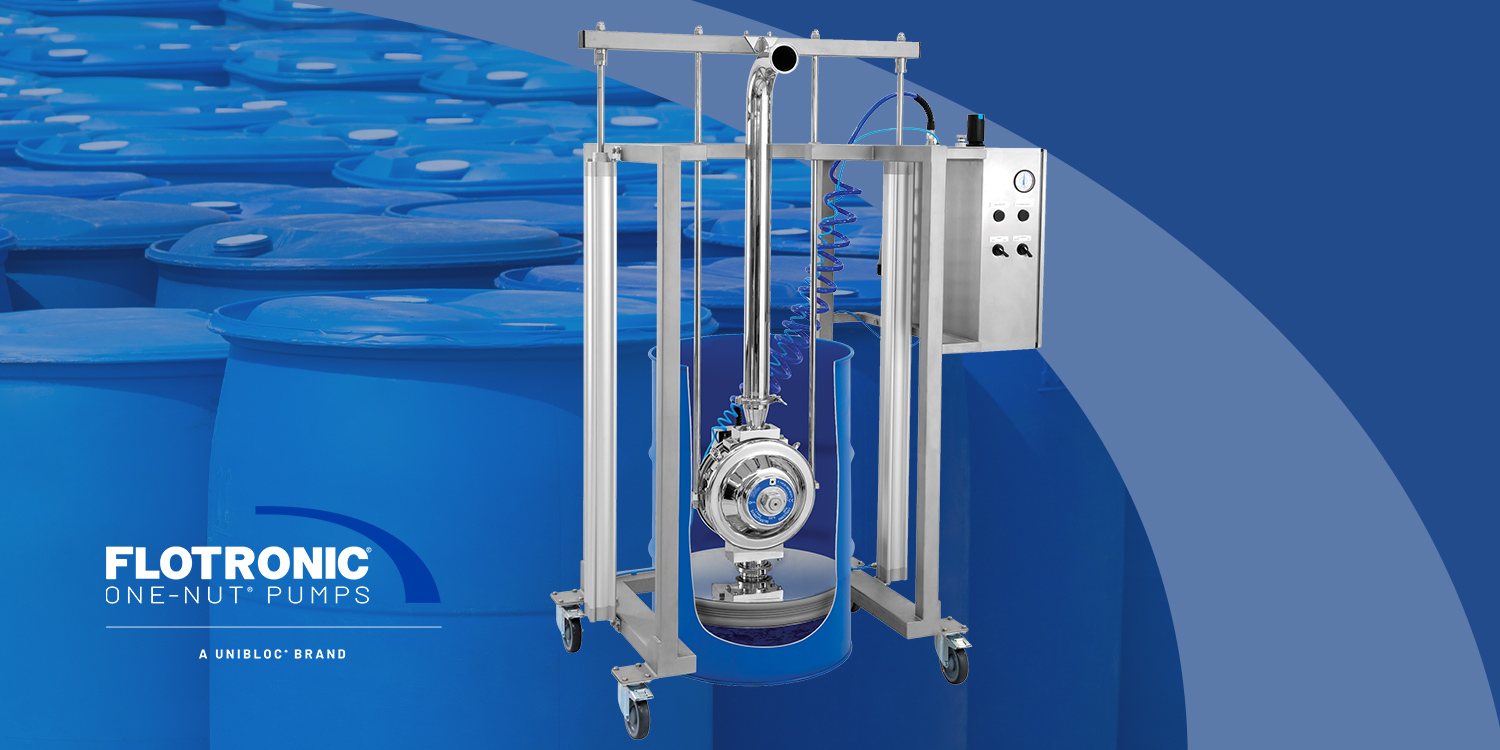
An air-operated double-diaphragm (AODD) pump is a common choice for drum, barrel, and tote unloading because it provides suction and is self-priming. The pump intake can be via a lance as with a stick pump, but it is often incorporated into a barrel unloading system, which adds a follower plate for increased viscosity capability. The Flotronic® Barrel Unloading System from Unibloc® Hygienic Technologies combines an inflatable wiper seal with the Flotronic One-Nut® AODD+™ pump. Mounted on a skid, the system can be made mobile.

Where stick pumps fall short
Stick pumps earn their place in low-viscosity, low-stakes transfer applications. But as viscosity climbs, suction-based designs lose efficiency and incomplete drum emptying becomes nearly inevitable. For high-value materials, the cost of unrecovered material can add up quickly, and the cleaning challenge that comes with it compounds the loss. Product left in the drum isn't just wasted; it creates a cleaning problem of varying difficulty, depending on viscosity, and a potential hygiene risk.
Where piston pumps fall short
Piston-pump unloaders handle high-viscosity materials well, but they are specialty pumps, typically more complex and more costly than AODD-pump-based systems. In hygienic applications where cleaning protocols are mandated, the time required to disassemble and clean a mechanically complex system directly translates into downtime and labor cost.
Where the Flotronic® Barrel Unloading System wins
The Flotronic barrel unloading system combines the unique One-Nut hygienic Air-Operated Double-Diaphragm (AODD) pump with the barrel unloading skid.
The inflatable seal is the design detail that changes the equation. It inflates to form a tight seal against the drum wall as it moves downward, capturing product that would otherwise be left behind by rigid plate or suction-only systems. When the drum is empty, the seal deflates for effortless removal: no wrestling with stuck components, no residue-laden hardware to disassemble.
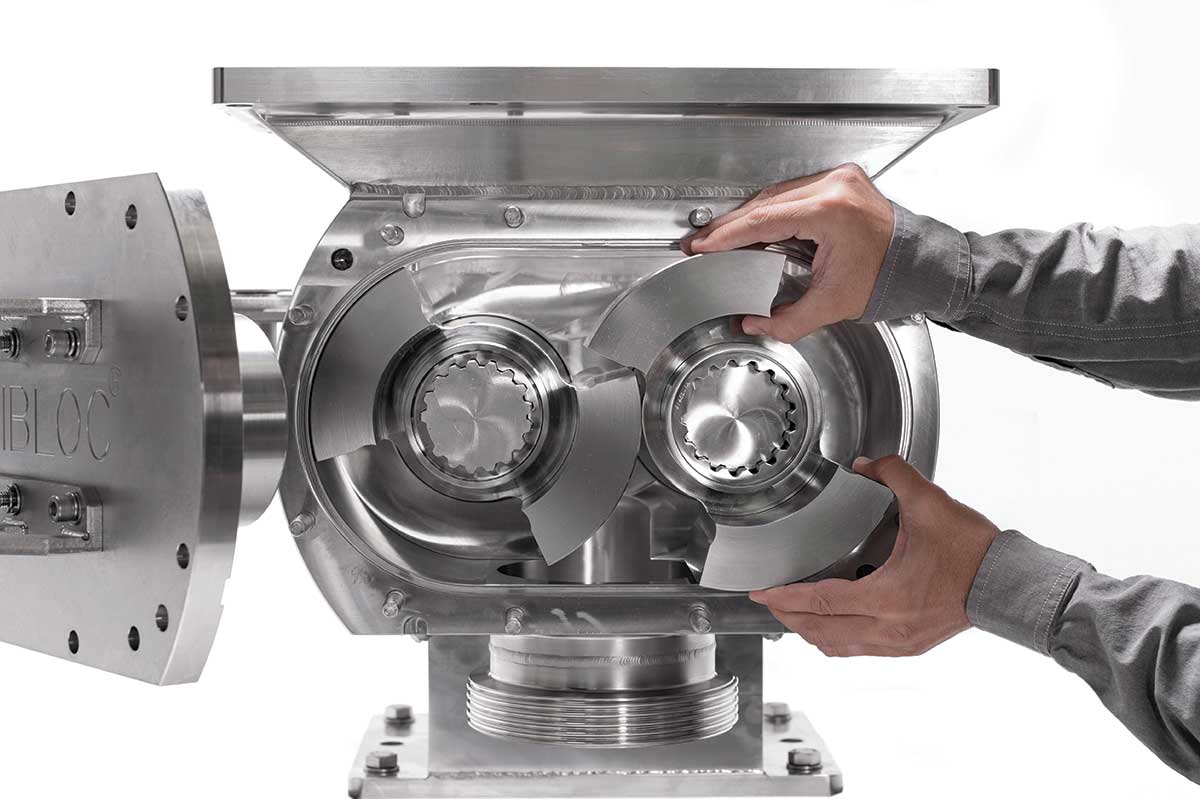
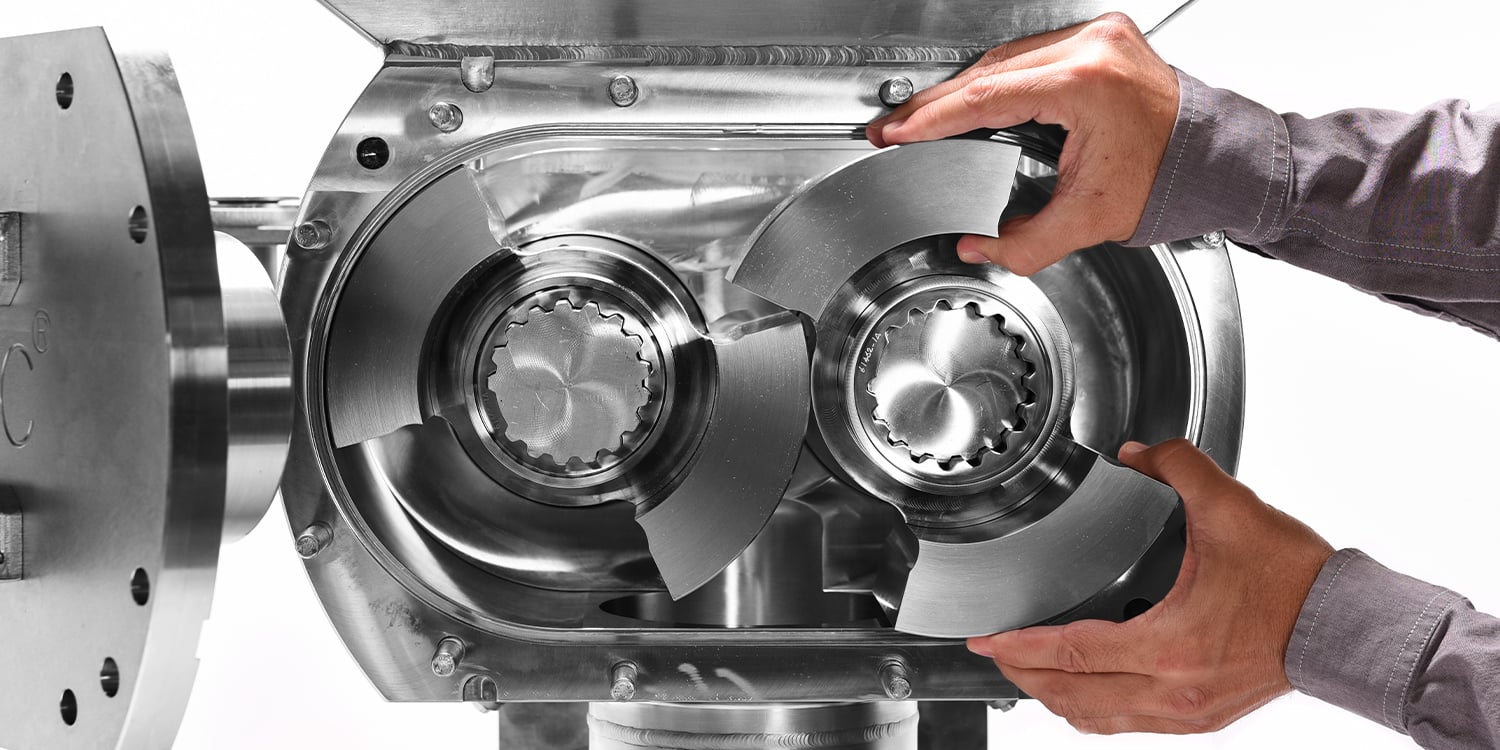
An optional self-draining configuration further minimizes product loss. Less product holdup than competing systems means better yield between runs. And because the system is built around the One-Nut pump design, complete pump disassembly and cleaning take approximately 15 minutes, cutting cleaning downtime by up to two hours compared to traditional AODD pumps.
The system is fully Clean-in-Place (CIP) compatible and can be cleaned using the pump itself or an external CIP rig. It meets FDA and (EC) 1935/2004 and 2023/2006 standards or compliance requirements — critical for food, beverage, pharmaceutical, and personal care applications. The skid is available in fully mobile or fixed configurations, with bespoke configurations for any fiber, metal, or plastic 55-gallon (200-liter) drum or stainless tote, including roller systems if required.
Head-to-head comparison of stick, piston, and AODD unloading systems
| Factor | Stick Pump | Piston Unloader | Flotronic Barrel Unloading System |
|---|---|---|---|
| High viscosity handling | Limited | Excellent | Excellent |
| Product waste | High | Moderate | Minimal |
| CIP/SIP compatible | Limited | Difficult | Yes |
| Cleaning time | Moderate | Long | ~15 min (One-Nut®) |
| Mechanical complexity | Low | High | Low |
| Hygienic compliance | Varies | Varies | FDA, EC approved |
| Bespoke configuration | No | Limited | Yes |
| Mobility | Broad | Limited | Fully mobile option |
The simplicity advantage
What sets the Flotronic system apart isn't just performance; it's that the whole operation becomes simpler. One pump. One nut. Less waste. Operators spend less time cleaning, less time troubleshooting, and less time watching product go to waste at the bottom of a drum. In food and beverage, cosmetics, and chemical processing environments where certain ingredients are more precious than others and every minute of production time counts against ROI, this simplicity quickly compounds into real savings.
Ready to simplify your drum unloading?
Contact Unibloc Hygienic Technologies today to find out whether the Flotronic Barrel Unloading System or another pump technology is the right solution for your application. Our application engineers can help you match the right technology to your product, your facility, and your productivity goals.