It’s critical to choose the right pump when every drop counts for your metering and dosing process
When precision matters, especially in hygienic processing, choosing the right pump for metering and dosing applications can make or break your line efficiency. Two technologies stand out in conversations about metering and dosing: the gear pump and the circumferential piston pump. Both are positive displacement designs, meaning they move a fixed volume of fluid per revolution. But how they achieve that, and how well they hold up under real-world conditions, tells a very different story
Gears vs rotors: a tale of two geometries
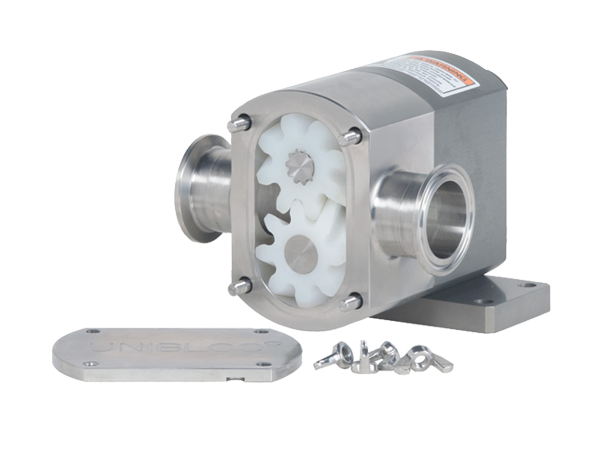
A gear pump moves product by meshing two precision gears that trap and carry fluid from the inlet to the outlet, typically via an internal/external gear pair. The tight tolerances between gear teeth and the pump casing enable metering, providing accuracy in filling containers, for example. Spiral cut gears deliver pulsation-free flow and smooth, quiet operation and are fully compatible with servomechanical equipment, allowing flow rates to be dialed to precise specs. A gear pump has two rotors: one rotor is driven, and the other rotor follows the movement of the driving rotor. The rotors touch each other during operation.
A circumferential piston pump may look like a lobe pump, but the difference is in the rotors. Circumferential piston pump rotors run in close clearance to both the casing wall and to hubs in the rotor case. This design sets them apart from lobe pumps, where only the rotor-to-casing clearance matters.
Manufacturers of circumferential piston pumps say the rotor design creates a long sealing surface, making the pump act like a piston pump. Others say that a circumferential piston pump is just a lobe pump by another name.
In a circumferential piston pump, fluid travels around the outer circumference of the casing to the outlet, with rotors that never contact each other or the casing wall. A circumferential piston pump has two rotors synchronized by timing gears in the gear case. The gearing prevents the rotors from touching.
Like gear pumps, circumferential piston pumps are positive displacement designs: flow is proportional to speed regardless of downstream pressure, which is the foundational requirement for metering and dosing accuracy.
Selection considerations: What is the difference between a gear pump and a circumferential piston pump?
In practice, a circumferential piston pump is an alternative to a lobe pump, rather than a gear pump. Although circumferential piston pumps are used in metering and filling, gear pumps offer greater accuracy at a lower cost. There are cases where circumferential piston pumps may be a better choice than gear pumps. First, they deliver higher discharge pressure than a gear pump. Second, their large cavities can handle entrained solids, which are not usually recommended with gear pumps. Third, circumferential piston pumps in low-viscosity applications allow less product backslip.
When comparing a gear pump to a circumferential piston pump, the application is only the starting point. The real difference is in the total cost of ownership.
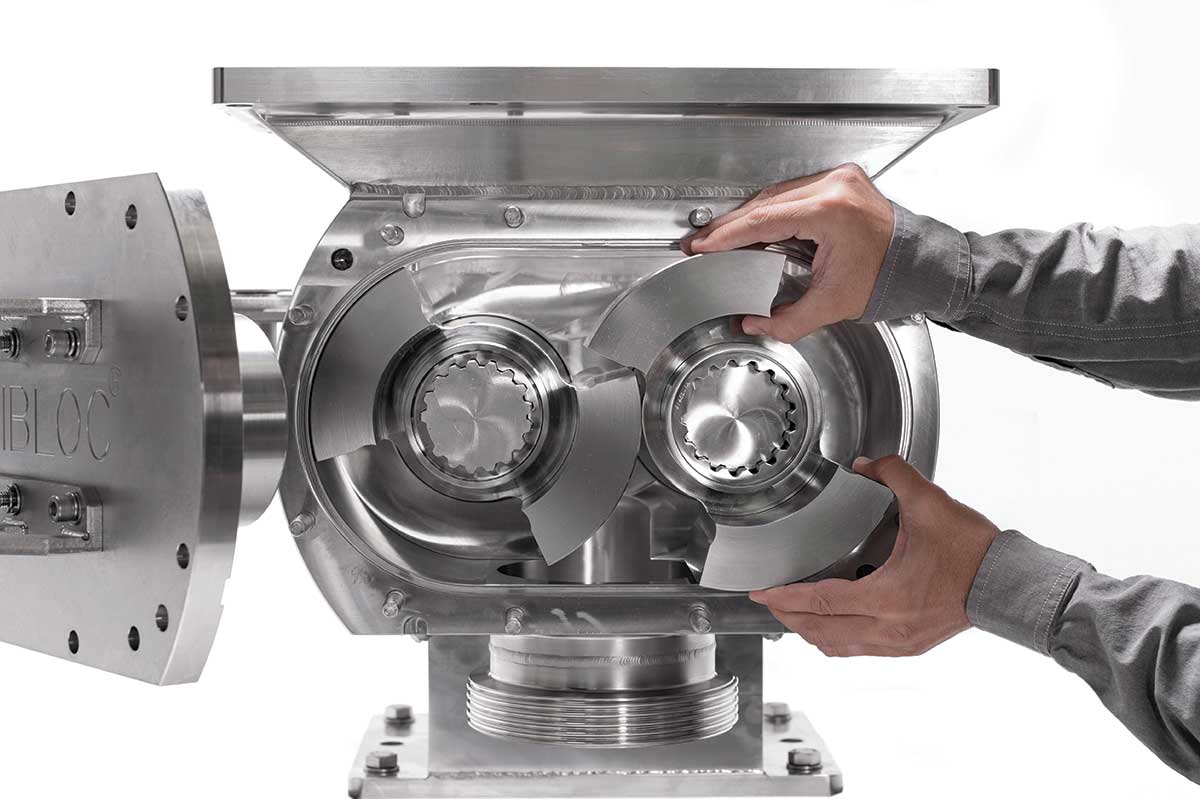
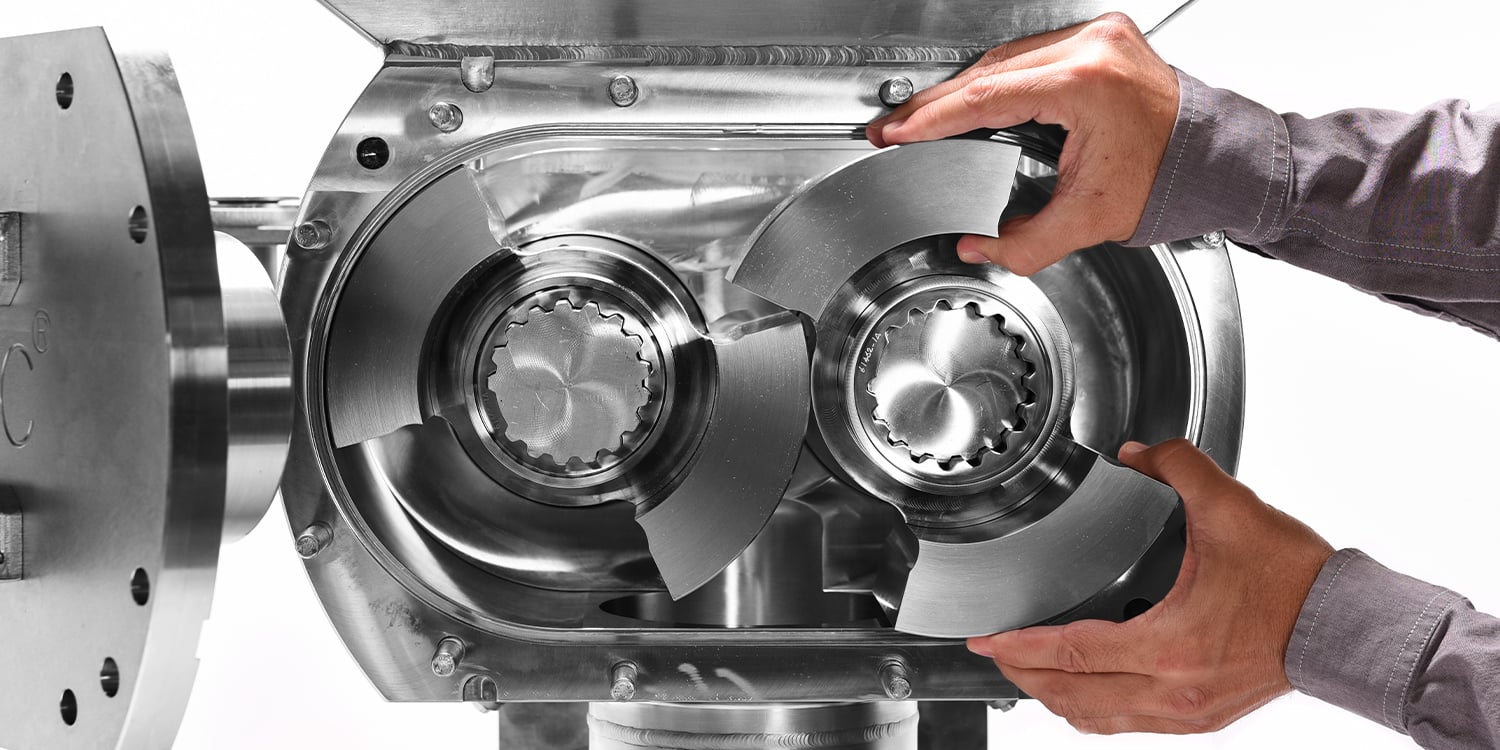
Some gear pumps, such as those with the patented Unibloc® QuickStrip® design, are easier to disassemble and reassemble, minimizing pump downtime. Workers can open the pump and remove the rotors without using any tools that could scratch hygienic surfaces. Parts are designed for one-way reassembly, reducing the chance of damage. Fewer parts, especially fewer small parts, reduce the risk that a component will be lost in the pump and become a contaminant or foreign object within the finished product.
Taken together, these gear pump features slash maintenance time, simplify training, reduce parts inventory, and extend the pump’s life.

When shear sensitivity calls the shots
Circumferential piston pumps can perform well when product viscosity varies significantly or when shear sensitivity is the overriding concern. Their comparatively long sealing surfaces accommodate viscosity fluctuation without significant slip. For processors handling cultured dairy, delicate emulsions, or products with live cultures where shear is the primary risk, a circumferential piston pump may warrant consideration.
That said, when precision metering and dosing are the priority, especially with thinner fluids where back slippage can compromise accuracy, the gear pump design offers clear advantages in the following areas:
- flow consistency
- pressure capability
- mechanical stability
- cleanability
In meat processing, for example, where contamination risk is acute and downtime costly, the differences between pump designs become especially consequential. Unibloc Hygienic Technologies notes that most circumferential piston pumps use a metal knob on the front of the rotor that seats into the pump's front cover. That metal-on-metal contact generates wear over time and, by the manufacturer's own admission, releases metal particles directly into the product. The Unibloc QuickStrip design eliminates this risk through plastic-on-metal contact between the rotor and wear pad. This feature protects product integrity, meets food safety standards, and reduces the costly repairs that metal-on-metal wear inevitably brings.
Pump vs. Pump: How do they stack up? How do I choose the right hygienic pump for my application?
| Factor | Gear Pump | Circumferential Piston Pump |
|---|---|---|
| Metering accuracy | Excellent, pulse-free | Good |
| Shear | Moderate | Low |
| Pressure capability | Low | High |
| Viscosity range | Water-thin to moderately viscous | Water-thin to highly viscous |
| Hygienic design | Yes | Yes |
| CIP/SIP | Yes | Yes |
| 3-A certified | Yes | Varies |
| Maintenance access | QuickStrip, tool-free | Standard disassembly |
| Footprint | Compact | Moderate |
| Typical applications | Dosing, metering, oils, chocolate | Dairy, creams, pastes |
The right pump is one conversation away
Contact Unibloc Hygienic Technologies today to find out whether a gear pump or another pump technology is the right solution for your application. UHT offers various hygienic pump technologies, including lobe, AODD, twin screw, and gear pumps, to help applications engineers select the right fit depending on their process. View our Quick Select Pump Comparison infographic for a detailed technical comparison or reach out to discuss your specific requirements.